

Our Blog

Home Blog

Your Guide to Navigating UK Law—Expert Tips & Updates

- Our Blog -

Learn From Experts

Your Guide to Navigating UK Law—Expert Tips & Updates

Civil Penalty | 26 May

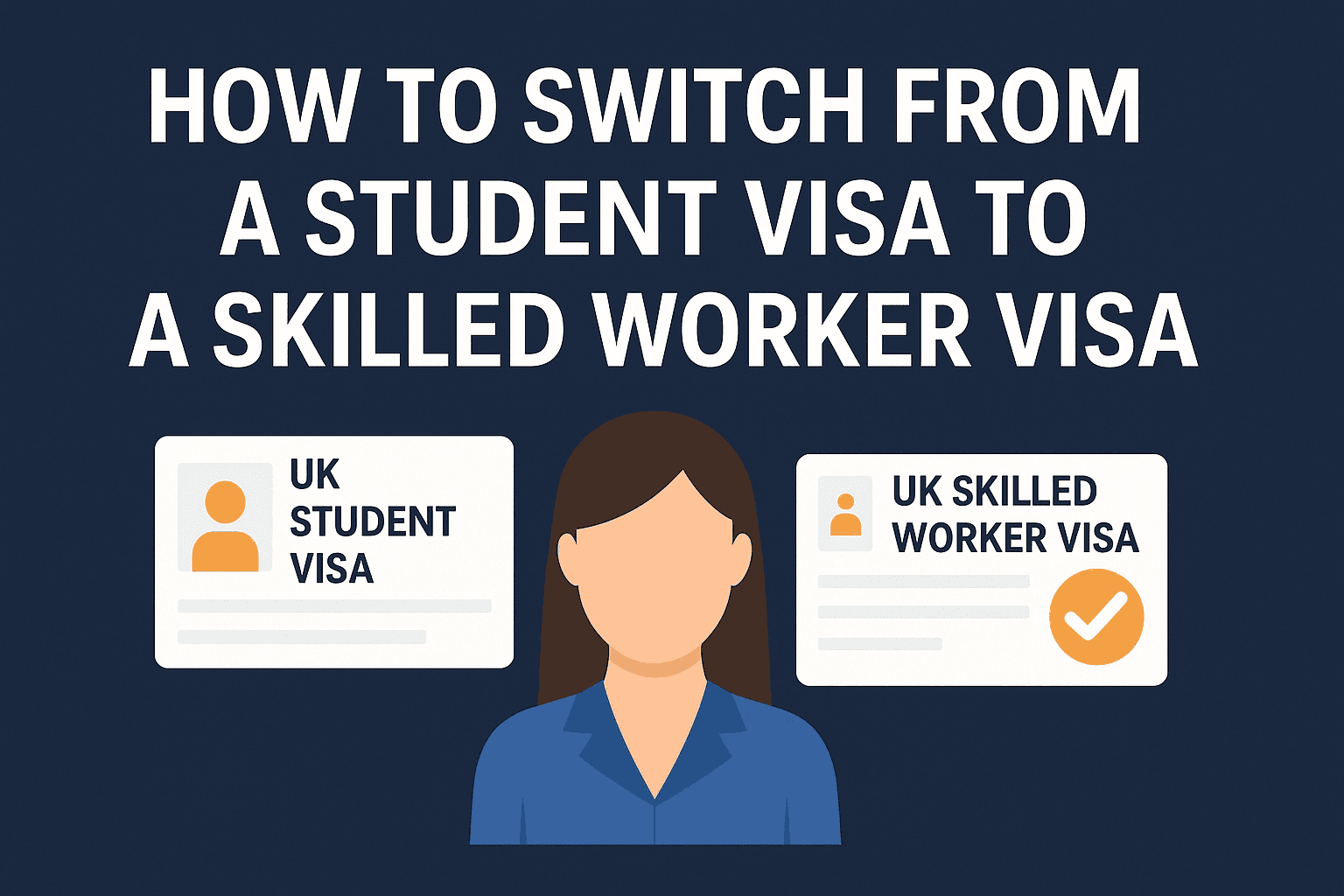
How to Switch from a Student Visa to a Skilled Worker Visa (2025 Guide)

Many international students finish their studies in the UK and want to stay to work. The good news is that most students can switch from a Student Visa to a Skilled Worker Visa without leaving the UK — as long as they meet the requirements.

This step-by-step guide explains how switching works, what documents are needed, and how employers can sponsor graduates.

✅ Can You Switch to a Skilled Worker Visa?

Yes — most students can switch inside the UK if:

  • They have a confirmed job offer
  • The employer holds a Sponsor Licence
  • The job meets the Skilled Worker salary and skill level
  • They receive a Certificate of Sponsorship (CoS)

Students do not need to leave the UK to apply, which makes the process faster and easier.

✅ Step-by-Step: How to Switch

Step 1: Get a Job Offer from a Licensed Sponsor

The employer must be approved by the Home Office.
They must offer a genuine skilled job that meets the salary and occupation code rules.

Many graduates receive jobs through:

  • Graduate schemes
  • Internships that convert to full-time roles
  • Direct job applications

Step 2: Employer Issues a Certificate of Sponsorship (CoS)

Once the offer is confirmed, the employer assigns a digital Certificate of Sponsorship.

The CoS includes:

  • Job title and occupation code
  • Salary
  • Start date
  • Sponsor details

The visa application cannot be started without the CoS number.

Step 3: Prepare Your Documents

Students normally need:

  • Passport
  • Certificate of Sponsorship
  • Proof of English level (degree is usually enough)
  • TB test (if applicable)
  • Police clearance (for certain roles)
  • Financial evidence, unless employer certifies maintenance

If you completed a degree in the UK, your English requirement is automatically met — you do not need another test.

Step 4: Apply Online for the Skilled Worker Visa

The application is done on the UK Government website.
You will provide:

  • Personal details
  • Travel history
  • Passport details
  • CoS information
  • Payment for visa and IHS (Health and Care visa has no IHS)

After submitting, you will be asked to verify identity and provide biometrics.

Step 5: Biometrics and Identity Check

You will either:

  • Use the ID Check App on your phone, or
  • Visit a visa application centre and submit fingerprints and a photo

Step 6: Wait for a Decision

Most applications take around 8 weeks inside the UK.
Priority services can be used for faster results if available.

Once approved, you can start working full-time for your sponsor.

✅ Can You Work Full-Time While Switching?

You can work full-time after your Skilled Worker Visa is granted.

Before approval, you must follow Student Visa work rules, unless:

  • You finished your degree
  • Your course officially ended
  • Your CAS end date has passed
  • OR you moved to the Graduate Visa

If unsure, professional advice is recommended to avoid breaches.

✅ How Long Does the Visa Last?

Up to 5 years at a time.
After 5 years, you can apply for Indefinite Leave to Remain (ILR) if eligible.

✅ Can Family Members Stay With You?

Yes.
Dependants can switch with you if they already live in the UK, or apply from abroad if new dependants are joining.

✅ Why Applicants Get Refused

Common reasons include:

  • Wrong occupation code
  • Salary below minimum
  • Employer is not a licensed sponsor
  • Missing documents
  • Incorrect application information

Working with a regulated immigration adviser reduces the risk.

✅ How Stonebridge Legal Solutions Helps

Stonebridge assists with:

  • Skilled Worker applications
  • Switching from Student Visa
  • Employer sponsorship and CoS
  • HR and compliance
  • ILR planning for the future

If you are graduating and want to stay in the UK, professional guidance protects your immigration status and helps you start your career smoothly.

📞 Contact Stonebridge Legal Solutions today for help switching to a Skilled Worker Visa.


Explore Details
Legal Updates | 26 May

Health Care Visa vs Skilled Worker Visa What the Difference?

The UK offers more than one route for foreign workers to come to the country. Two of the most popular are the Skilled Worker Visa and the Health and Care Visa. Both allow individuals to work and live in the UK, but they are not the same. Each has different advantages, requirements, and processing rules.

This guide explains the key differences in simple terms so applicants and employers can choose the right option.

✅ What is the Skilled Worker Visa?

The Skilled Worker Visa is a general work visa for a wide range of professional roles across many industries.
It applies to jobs at the required skill level, including:

  • IT and technology
  • Engineering
  • Finance
  • Management
  • Construction
  • Hospitality
  • Healthcare (non-sponsored care workers can also use this route)

If the job meets the salary and occupation code requirements, the applicant can qualify.

✅ What is the Health and Care Visa?

The Health and Care Visa is a special version of the Skilled Worker route.
It is designed specifically for:

  • Qualified doctors
  • Nurses
  • Health professionals
  • Adult care workers
  • Senior care workers
  • Certain medical and care sector roles

This route is faster, cheaper, and prioritised by the Home Office because of the UK’s staffing needs in the health and care sector.

✅ Key Differences Between the Visas

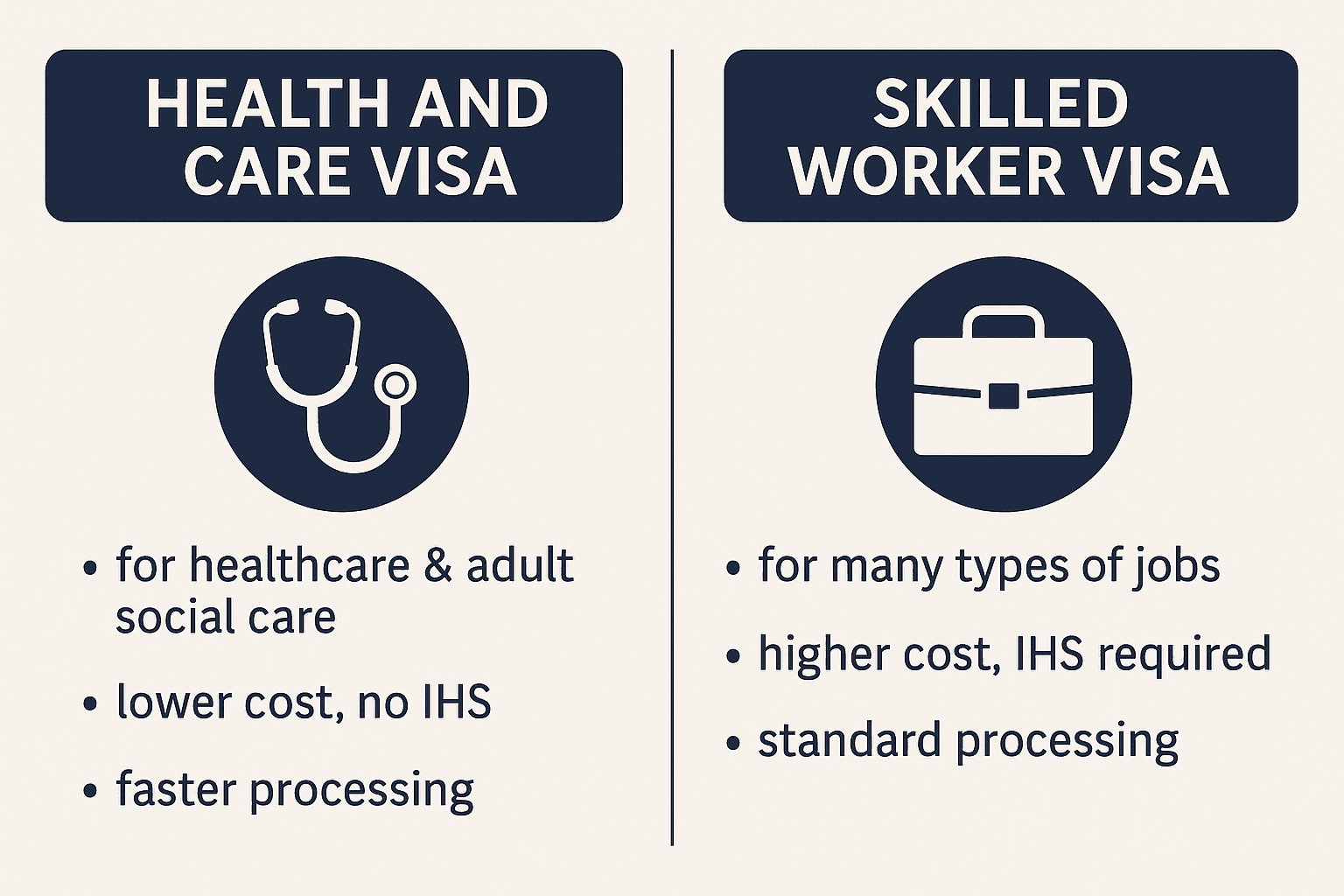
✅ 1. Eligible Jobs

  • Skilled Worker Visa: Wide range of professions in different industries
  • Health and Care Visa: Only healthcare and adult social care roles

So an IT developer must use the Skilled Worker Visa, but a nurse would normally use the Health and Care Visa.

✅ 2. Visa Fees and Costs

The Health and Care Visa is cheaper because the government wants to attract healthcare workers.

  • Lower visa fees
  • No Immigration Health Surcharge (IHS)

Workers in other industries under the Skilled Worker route must normally pay both visa fees and IHS.

✅ 3. Processing Time

Health and Care visas are usually faster, as the Home Office prioritises them.

  • Many cases receive decisions quicker than standard Skilled Worker applications

Skilled Worker applications also move efficiently, but do not receive automatic priority unless paid for.

✅ 4. Employer Requirements

Both visas require:

  • A licensed sponsor
  • A valid Certificate of Sponsorship
  • Jobs meeting salary and occupation code rules

However, care providers must show genuine business need and compliance, as social care roles are closely monitored.

✅ 5. Family Members

Both visas allow dependants to join:

  • Husband or wife
  • Unmarried partner (if eligible)
  • Children under 18

Family members will have similar visa lengths and work rights.

✅ 6. Path to Permanent Residency

Both routes can lead to Indefinite Leave to Remain (ILR) if the applicant meets:

  • Five years’ residence
  • Salary requirement
  • Continuous lawful employment
  • English language and Life in the UK test for ILR

So both visas offer a pathway to settlement in the UK.

✅ Which Visa is Better?

It depends on the job.

✅ If the applicant works in healthcare or adult social care, the Health and Care Visa is usually the best option because it is faster and cheaper.
✅ If the applicant works in another professional field, the Skilled Worker Visa is the correct route.

Some healthcare applicants also choose Skilled Worker if they do not qualify under Health and Care rules.

✅ How Stonebridge Legal Solutions Helps

Stonebridge supports:

  • Skilled Worker Visa applications
  • Health and Care Visa applications
  • Sponsor Licence for employers
  • Certificate of Sponsorship issuance
  • Switching from Student to Skilled Worker
  • ILR for Skilled Workers and Health & Care workers

Whether you are an employer or applicant, professional guidance ensures a smooth and compliant process.

📞 Contact Stonebridge Legal Solutions today for expert advice on the right visa option for your situation.

Explore Details
Legal Updates | 26 May

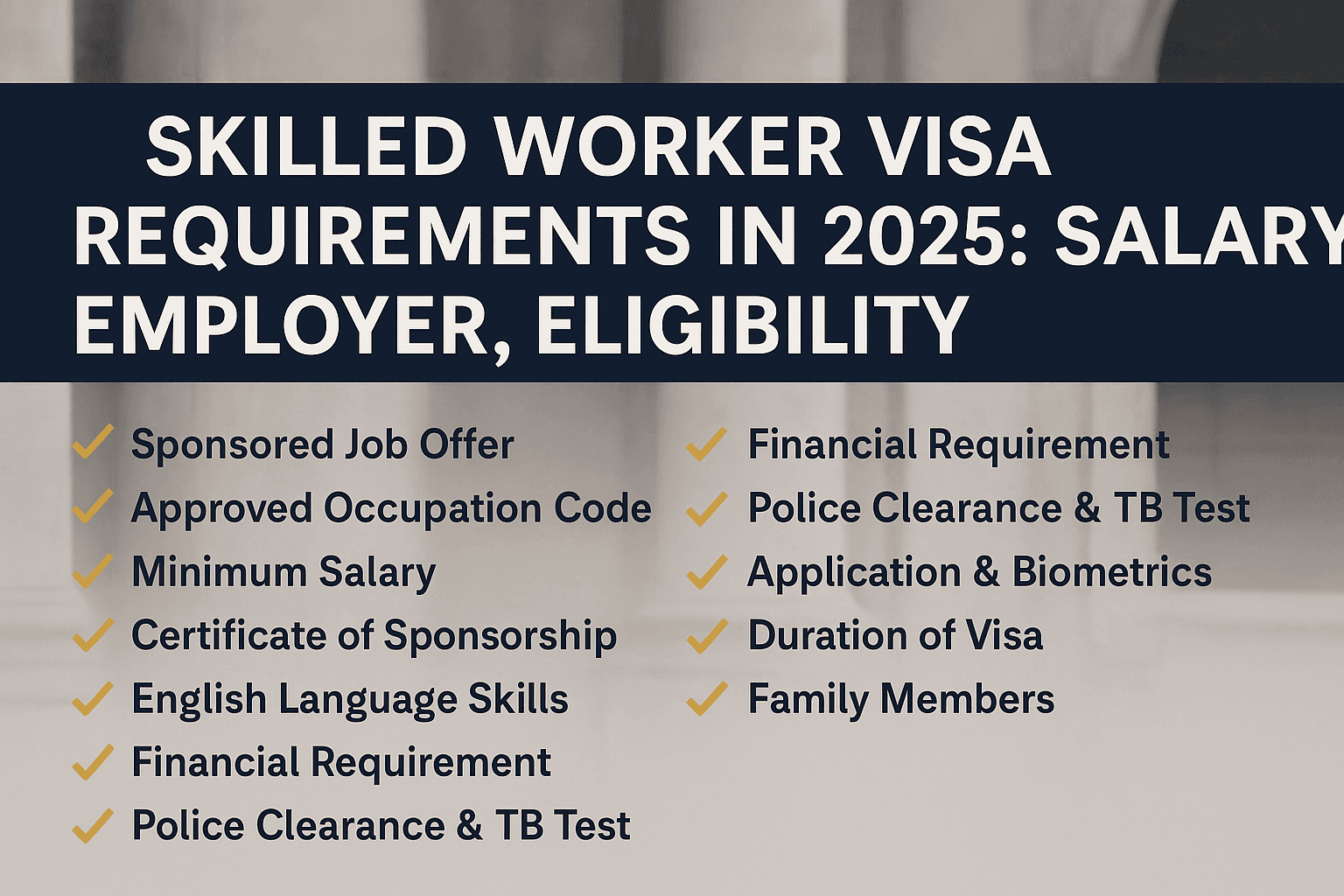
Skilled Worker Visa Requirements in 2025: Salary, Employer, Eligibility

The Skilled Worker Visa is one of the most popular immigration routes for working in the UK. But to qualify, applicants must meet specific immigration requirements based on job type, salary, employer status, and English language rules.

This guide explains the full Skilled Worker Visa requirements for 2025 in simple, clear steps.

✅ 1. You Must Have a Sponsored Job Offer

To apply, the worker must first have a confirmed job offer from a UK employer who is licensed by the Home Office.

A valid job offer must:

  • Be genuine and needed for the organisation
  • Be at the correct skill level
  • Meet the minimum salary rules
  • Include a Certificate of Sponsorship (CoS) reference number

If the employer is not a licensed sponsor, they must apply for a Sponsor Licence before hiring anyone on this visa.

✅ 2. The Job Must Be on an Approved Occupation Code

Each Skilled Worker job is linked to a specific occupation code that sets the required pay and skill level.

Examples of approved roles include:

  • IT professionals
  • Engineers
  • Accountants
  • Chefs
  • Managers
  • Care workers (for Health and Care Visa route)
  • Health professionals

The employer must choose the correct code and prove the role is genuine.

✅ 3. Minimum Salary Requirement

To qualify, the salary must meet the required threshold for that specific occupation code.

In most cases:

  • The job must pay at least the “going rate” for that role,
  • And it must meet the minimum national salary level set for Skilled Workers.

Salary requirements can vary based on the occupation code, hours, and experience.
Paying a lower salary than the law allows can lead to visa refusal.

✅ 4. Certificate of Sponsorship (CoS)

The employer issues a Certificate of Sponsorship through the Home Office system.
The CoS confirms:

  • Job details
  • Salary
  • Work location
  • Contract dates
  • Sponsor information

The worker cannot apply without this certificate.

✅ 5. English Language Requirement

The applicant must prove English ability at Level B1 (intermediate) in listening, speaking, reading and writing.

This can be met through:

  • An approved English test
  • A qualifying UK degree
  • A degree taught in English
  • Being a citizen of an English-speaking country (where accepted)

✅ 6. Financial Requirement (Maintenance Funds)

Applicants must show they can support themselves unless the employer certifies maintenance.

If required, they must show personal savings — normally 28 days of bank statements showing the minimum amount set by Home Office.

Many employers choose to certify maintenance so the worker does not need personal funds.

✅ 7. Police Clearance & TB Test (If Required)

Depending on nationality and job sector, applicants may need:

  • Tuberculosis test (from approved clinics if applying from a listed country)
  • Police clearance or criminal record certificate for certain roles such as healthcare and education

✅ 8. Application and Biometrics

After submitting the online visa form and paying the fees, the worker must:

  • Provide identity verification
  • Give fingerprints and a photograph
  • Upload documents

Decisions are usually given within:

  • About 3 weeks if applying from outside the UK
  • Around 8 weeks if switching visas from inside the UK

Priority processing may be available.

✅ 9. How Long Does the Visa Last?

Most Skilled Worker Visas last up to 5 years.
The worker can apply for Indefinite Leave to Remain (ILR) if they meet the long-term residence and salary rules after 5 years.

✅ 10. Can Family Members Join?

Yes.
Skilled Workers can bring:

  • Husband or wife
  • Unmarried partner (if eligible)
  • Children under 18

Each dependent must submit their own visa application.

✅ Common Mistakes to Avoid

Many visas are refused because of:

  • Incorrect occupation code
  • Salary below required level
  • Missing documents
  • Employer is not compliant
  • Wrong or incomplete application forms
  • Using an unlicensed sponsor

Professional guidance avoids these costly problems.

✅ How Stonebridge Legal Solutions Can Help

Stonebridge assists:

  • Skilled Worker Visa applications
  • Employer sponsorship
  • CoS issuance
  • Switching from Student Visa to Skilled Worker
  • Compliance and HR setup for UK employers
  • ILR applications for Skilled Workers

With expert support, the process becomes faster, safer and stress-free.

📞 Contact Stonebridge Legal Solutions today for Skilled Worker Visa help or a business consultation.

Explore Details
Legal Updates | 26 May

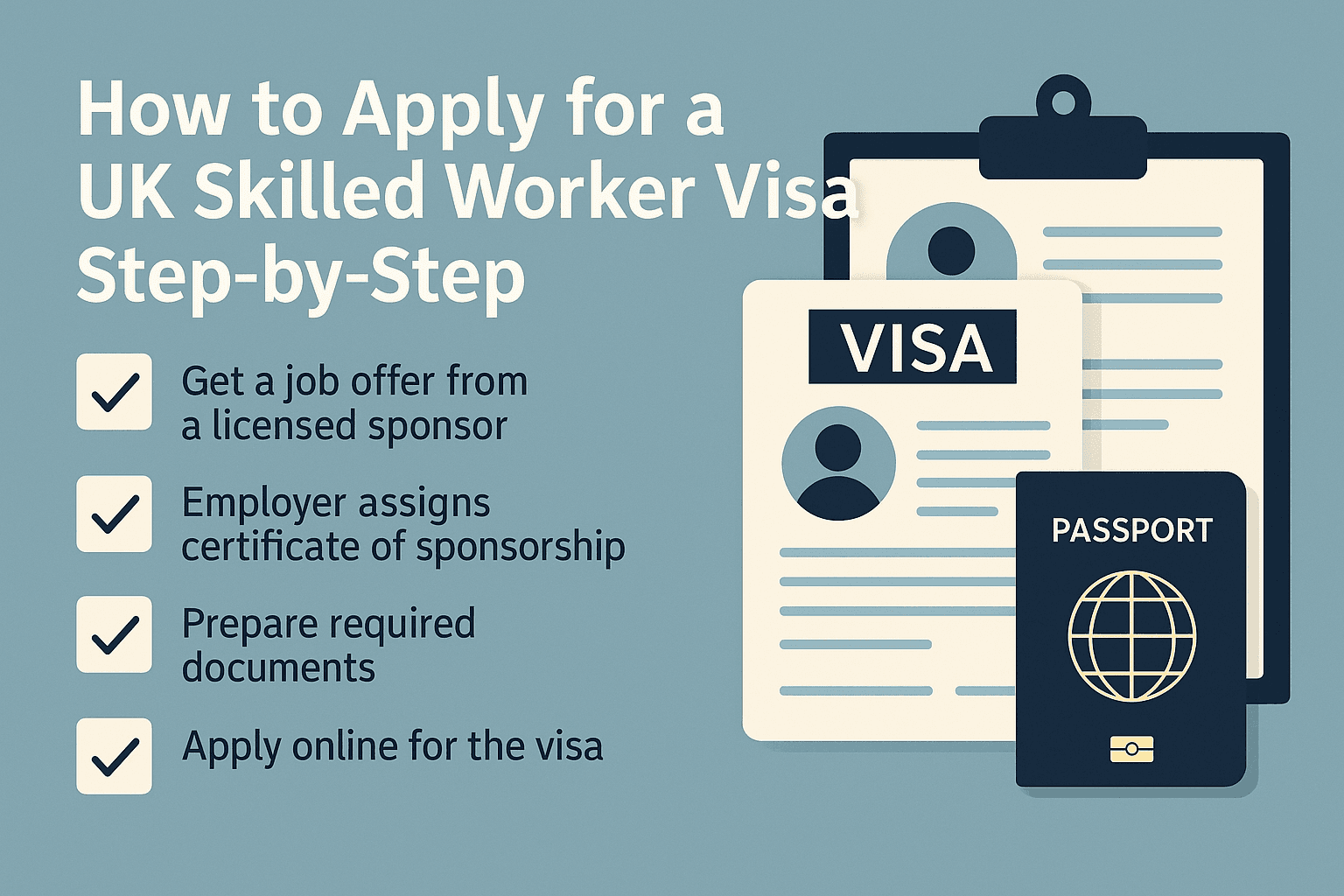
How to Apply for a UK Skilled Worker Visa (Step-by-Step Guide 2025)

The UK Skilled Worker Visa allows qualified workers to move to the UK and work for a Home Office-approved employer. It replaced the old Tier 2 (General) Visa and is now the main route for hiring overseas employees.

This guide explains the process step-by-step, the documents required, and what applicants and employers must prepare.

✅ Who Can Apply?

  1. A person can apply for the Skilled Worker Visa if:
  2. They have a confirmed job offer from a UK employer
  3. The employer holds a valid Sponsor Licence
  4. The job is on an eligible occupation code
  5. The salary meets the required threshold
  6. They meet English language and financial requirements

If these boxes are ticked, the applicant can continue to the full process below.

✅ Step-by-Step: How to Apply for a UK Skilled Worker Visa

Step 1: Get a Job Offer from a Licensed Sponsor

The employer must be approved by the Home Office and listed on the UK Register of Sponsors.
If a company is not licensed, they must apply for a Sponsor Licence first.

The job offer must be:

  • Genuine
  • Skilled to the correct level
  • Paid at or above the legal salary requirement

Step 2: Employer Issues a Certificate of Sponsorship (CoS)

Once the job is confirmed, the employer assigns a Certificate of Sponsorship through the Sponsorship Management System.

The CoS contains:

  1. Employer details
  2. Job title and occupation code
  3. Working hours
  4. Salary
  5. Start and end dates of employment
  6. Unique reference number for the visa application

The worker cannot apply for a visa without this number.

Step 3: Prepare Required Documents

Applicants will normally need:

  • Valid passport
  • Certificate of Sponsorship number
  • Evidence of English language proficiency
  • Proof of qualifications (if required for the job)
  • TB test certificate (for certain countries)
  • Police clearance (if requested)

If the employer certifies maintenance, the applicant does not need their own bank statements.

Step 4: Apply Online for the Visa

The Skilled Worker Visa is applied through the UK Government website.
The application requires:

  • Personal information
  • Travel history
  • Passport details
  • Employment and CoS details
  • Payment of fees and Immigration Health Surcharge

Most applicants apply from outside the UK, but people already in the UK on eligible visas (such as Student Visa) can switch.

Step 5: Biometrics and Identity Verification

After submitting the online form, the applicant must:

  • Attend a visa application centre, or
  • Use the UK Immigration ID Check app (for eligible nationals)

Biometrics will be recorded: fingerprints and photograph.

Step 6: Wait for a Decision

Processing times depend on where the applicant applies:

  • Outside the UK: usually around 3 weeks
  • Inside the UK (switching or extension): normally 8 weeks

Priority services may be available for a faster decision.

Step 7: Travel and Start Work

When the visa is granted, the applicant receives a digital status or visa vignette.
Upon arrival in the UK, they can start working for the sponsor exactly as described in the CoS.

✅ How Long Can Someone Stay on a Skilled Worker Visa?

Most visas are granted for up to 5 years at a time.
Workers can later apply for Indefinite Leave to Remain (ILR) if they meet the residence and salary requirements.

✅ Can Family Members Join?

Yes. Skilled Workers can bring:

  • Husband or wife
  • Unmarried partner (if eligible)
  • Children under 18

Each family member must submit their own visa application.

✅ Common Reasons Applications Are Refused

  • Wrong or false occupation code
  • Salary below the required level
  • Missing documents
  • Employer is not compliant
  • Errors on application form
  • Previous immigration history problems

Professional guidance helps avoid costly mistakes.

✅ How Stonebridge Legal Solutions Can Help

Stonebridge supports both employers and overseas workers with:

  • Skilled Worker Visa applications
  • Sponsor Licence for businesses
  • Certificate of Sponsorship assignment
  • Switching from Student Visa to Skilled Worker Visa
  • ILR applications for Skilled Workers

📞 Contact Stonebridge Legal Solutions today for expert guidance through the Skilled Worker process.

Explore Details
Case Study | 23 May

How UK Businesses Can Apply for a Sponsor Licence (2025 Guide)

Applying for a UK Sponsor Licence allows your business to legally hire skilled foreign workers from outside the UK. If a company wants to sponsor Skilled Workers, Health Care Workers, or Minister of Religion applicants, they must first be approved as a Licensed Sponsor by the Home Office.

This guide explains the full process step-by-step, required documents, costs, and compliance duties — written in simple, clear language for business owners.


Who Needs a Sponsor Licence?

Your business needs a Sponsor Licence if you want to hire anyone who does not have the right to work in the UK, including:

  1. Skilled Worker Visa staff
  2. Health Care Workers
  3. Minister of Religion
  4. Specialist Worker (Global Business Mobility route)
  5. Businesses that do NOT need a licence:
  6. Hiring UK nationals
  7. Hiring people with ILR/settled/pre-settled status
  8. Hiring students who are allowed to work part-time
  •  

Basic Eligibility Requirements

To be approved, your business must:

✅ Be a genuine trading UK business
✅ Have no recent history of immigration offences
✅ Have proper HR systems to monitor sponsored workers
✅ Be able to offer genuine skilled jobs meeting salary & skill requirements

If a business has previously been fined by Home Office or failed compliance checks, they may be refused.


Step-by-Step: How to Apply for a Sponsor Licence

1. Choose the Right Type of Licence

Most companies apply for:

Worker Licence – for Skilled Worker, Health Care, Minister of Religion
Temporary Worker Licence – charity, creative, seasonal, etc.
✅ Some businesses apply for both.


2. Gather Required Documents

Home Office normally asks for 4 supporting documents. Common accepted documents include:

  1. VAT certificate
  2. Employer’s liability insurance certificate
  3. Certificate of incorporation (Companies House)
  4. Business bank statements
  5. Recent HMRC PAYE registration letter
  6. Evidence of business premises (lease, utility bills)
  7. All documents must be clear scans or digital copies.


3. Assign “Key Personnel”

The business must nominate:

RoleResponsibility
Authorising OfficerSenior person responsible for compliance
Key ContactMain point of contact with Home Office
Level 1 UserManages the Sponsorship Management System (SMS)

Small businesses can use the same person for all three roles if eligible.

4. Apply Online

  • Submit the online Sponsor Licence application on the Home Office website
  • Pay the application fee (depends on business size)
Company SizeSponsor Licence Fee
Small or Charity£536
Medium or Large£1,476

After submission, upload documents within 5 working days.


5. Home Office Decision

Typical processing time:

8 weeks standard
10 working days priority (additional £500)

Home Office may:

  • Approve the licence
  • Request additional documents
  • Conduct a compliance audit

Once approved, the business is added to the UK Register of Licensed Sponsors and can start hiring.


After Approval: What Happens Next?

The business receives access to the Sponsorship Management System (SMS).
From there, you can:

✅ Assign a Certificate of Sponsorship (CoS)
✅ Support visa application of a worker
✅ Track sponsored employees


How Stonebridge Legal Solutions Can Help

Applying without experience can result in:

❌ Missing documents
❌ Incorrect HR setup
❌ Delays or refusal

Stonebridge supports businesses with:

✅ Full sponsorship licence application
✅ HR compliance setup
✅ Priority processing
✅ Assistance with Skilled Worker, Health Care Worker, and Self-Sponsorship routes
✅ Support during Home Office compliance visits

📞 Contact Stonebridge Legal Solutions today for a consultation and professional support with your Sponsor Licence application.

Frequently Asked Questions

1. How long does a Sponsor Licence last?
✔ Valid for 4 years, with option to renew.

2. Can small companies apply?
✔ Yes. Even very small businesses can sponsor workers if they meet compliance rules.

3. Can a business lose its licence?
✔ Yes — if HR duties are not followed. Suspensions and revocations happen when companies ignore rules.

Explore Details
Legal Updates | 23 May

Top Reasons the Home Office Suspends Sponsor Licences & How to Fix It (2025 Guide)

When a UK business receives a Sponsor Licence suspension notice, it can feel serious and stressful. A suspension means the Home Office believes the company is not meeting sponsorship duties — and if the issues are not corrected, the licence can be fully revoked.

This guide explains the most common reasons for suspension, how to respond, and how a legal adviser like Stonebridge Legal Solutions can help protect your business.

✅ What Does a Sponsor Licence Suspension Mean?

A suspension does not mean your licence is cancelled.
But during suspension:

  • You cannot assign new Certificates of Sponsorship
  • Your business will be closely monitored
  • Home Office may request documents, audits or explanations

If the problems are not fixed, the licence can be revoked, and sponsored workers may lose their right to work.

✅ Top Reasons the Home Office Suspends Sponsor Licences

1. Poor HR and Record-Keeping

The Home Office expects employers to maintain accurate HR files for every sponsored worker.
Suspensions often happen when:

  • Employment contracts or job descriptions are missing
  • Right-to-work checks are not recorded properly
  • Contact details, addresses or absences are not updated
  • Payroll and salary evidence is incomplete

If a business cannot show proper records, the Home Office assumes non-compliance.

2. Paying Below the Required Salary

Sponsored workers must be paid according to the Skilled Worker salary threshold and Home Office salary rules.
A licence can be suspended if:

  • Salary is lower than stated on the CoS
  • Hours are reduced without permission
  • Cash-in-hand or irregular payments are found

Home Office treats salary breaches as a serious violation.

3. Job Does Not Match the Correct Skill Level

Every sponsored worker must have a genuine skilled role that fits an eligible occupation code.
Licences are suspended when:

  • Job titles are fake or misleading
  • Workers are doing a lower-skilled job than stated
  • Business cannot explain why the job is needed

This is called “role misuse” or “fake job sponsorship”.

4. Not Reporting Changes on Time

All sponsors must report key changes to the business or to the worker within strict deadlines through the Sponsorship Management System (SMS).
Suspensions happen when employers fail to report:

  • Worker leaving the job or changing duties
  • Salary or work location changes
  • Company address or ownership changes
  • Extended absences

Late reporting is treated as a breach of sponsorship duties.

5. Failed Home Office Compliance Visit

The Home Office can carry out surprise or scheduled audits.
A licence can be suspended if during the visit:

  • HR systems are not organised
  • Workers cannot be verified
  • Immigration paperwork is missing
  • The business appears inactive or non-trading

If officers lose trust in the employer, suspension is likely.

✅ How to Fix a Sponsor Licence Suspension

If your licence is suspended, you will receive a written notice explaining the reasons. The business is given an opportunity to respond and correct the issues.

Step 1: Read the suspension reasons carefully

The notice will list compliance failures. These must be answered one-by-one.

Step 2: Gather evidence

Businesses need to collect clear proof, such as:

  • Payroll records
  • HR files
  • Right-to-work checks
  • Updated employment contracts
  • Communication logs

The goal is to show the Home Office the business is compliant.

Step 3: Provide a written explanation

A strong representation letter should:

  • Address every allegation directly
  • Include evidence
  • Demonstrate improved HR systems
  • Ask the Home Office to lift the suspension

A weak or incomplete response increases the risk of losing the licence.

Step 4: Fix the internal systems

Sometimes, the issue is not paperwork but the process itself.
Businesses may need to:

  • Train staff on compliance rules
  • Set up better attendance and payroll records
  • Use HR management tools
  • Appoint a trained Level 1 User

The Home Office wants proof that mistakes won’t continue.

✅ What if the Home Office Rejects the Response?

If the explanation is not accepted, the licence can be:

  • Downgraded to a B-rating (with an action plan)
  • Fully revoked

If revoked, all sponsored workers lose their sponsorship, and the business must reapply after cooling-off periods. Acting quickly and professionally is crucial.

✅ How Stonebridge Legal Solutions Can Help

Stonebridge assists businesses with:

  • Responding to suspension notices
  • Preparing compliance documents
  • Training HR teams on sponsorship duties
  • Preparing for Home Office visits
  • Restoring licence status and avoiding revocation

Most suspensions can be fixed when handled correctly and supported with the right evidence.

📞 Contact Stonebridge Legal Solutions today for urgent support if your Sponsor Licence is suspended or at risk.

Explore Details
Property Law | 23 May

Sponsor Licence Compliance Duties Every UK Employer Must Know (2025 Guide)

Once a business has a Sponsor Licence, the real responsibility begins. The Home Office expects employers to monitor, record and report important details about every sponsored worker. Failure to follow these duties can lead to serious consequences, including licence downgrade, suspension or permanent revocation.

This guide explains the essential Sponsor Licence compliance duties in simple language, so UK employers understand exactly what the Home Office requires.

✅ Why Compliance Matters

Being a licensed sponsor does not simply mean hiring overseas workers. It means the business has promised the UK Government that it will:

  • Keep accurate records
  • Report key changes
  • Prevent illegal working
  • Follow immigration rules at all times

If the Home Office believes an employer cannot be trusted, they can take action immediately. Many companies lose their licence because of small mistakes that could have been avoided.

✅ Main Sponsor Licence Compliance Duties

1. Record-Keeping Duties

Every sponsored employee must have a complete HR file. Employers should safely store:

  • Passport and visa copies
  • Right-to-work check results
  • National insurance information
  • Employment contract and job description
  • Contact details and updated address
  • Attendance and absence records
  • Salary and payment evidence

If these documents are missing or unclear, the Home Office may treat it as a breach.

2. Reporting Duties

Employers must report changes within strict time limits using the Sponsorship Management System (SMS).
You must report when:

  • A sponsored employee’s job role, salary or work location changes
  • The worker leaves the company or stops coming to work
  • There is a long absence without permission
  • The business changes address, ownership or key personnel

Failing to report on time is one of the most common reasons licences are downgraded or suspended.

3. Genuine Vacancy Requirement

A sponsored job must be real and meet the required skill level and salary set by the Home Office.
It is a breach if:

  • A worker is doing a different job than what was approved
  • The role does not match the correct occupation code
  • The job was created only to bring someone to the UK

The Home Office treats “fake jobs” very seriously.

4. Preventing Illegal Working

Employers must complete right-to-work checks before the employment starts and keep evidence on file.
This confirms that the worker:

  • Has valid immigration permission
  • Is being employed legally
  • Is working only within their visa conditions

If a business employs someone illegally, fines and criminal penalties may apply, even if the mistake was unintentional.

5. Monitoring Sponsored Workers

A licensed sponsor must always know where their sponsored employees are working.
This includes:

  • Tracking work locations
  • Recording approved holidays
  • Monitoring unauthorised absences
  • Updating HR files quickly

If the business cannot show proper oversight, the Home Office may assume the worker has disappeared or is working elsewhere.

✅ What Happens If Duties Are Ignored?

If duties are not followed, the Home Office can:

  • Issue warnings
  • Downgrade the licence rating
  • Suspend the licence
  • Revoke the licence completely

If revoked, all sponsored workers may lose their right to work and the business will not be able to sponsor anyone for years.

✅ How to Stay Fully Compliant

To protect the licence, employers should:

  • Keep organised digital HR records
  • Train staff responsible for sponsorship
  • Update SMS quickly when changes happen
  • Prepare for audits at any time
  • Get professional advice if unsure

Compliance is not a one-time task — it is continuous, throughout the employee’s stay in the UK.

✅ How Stonebridge Legal Solutions Supports Employers

Stonebridge helps businesses:

  • Set up strong HR compliance systems
  • Respond to Home Office concerns or audits
  • Manage reporting responsibilities
  • Avoid suspension or revocation
  • Renew licences smoothly and on time

With professional support, even small businesses can stay fully compliant and hire international talent safely.

📞 Contact Stonebridge Legal Solutions today for compliance advice or full licence management support.

Explore Details
Property Law | 23 May

Step-by-Step: Renewing a UK Sponsor Licence in 2025

A Sponsor Licence is normally granted for four years. If a business wants to continue sponsoring Skilled Workers, Health Care staff, Ministers of Religion or Temporary Workers, the licence must be renewed before it expires. Failing to renew on time can result in the licence becoming inactive, meaning sponsored workers may lose their right to continue working.

This guide explains how Sponsor Licence renewal works in 2025, the required documents, common mistakes, and how Stonebridge Legal Solutions can help.

✅ When Should You Renew Your Sponsor Licence?

The Home Office allows businesses to apply for renewal up to 90 days before the licence expiry date.
Waiting until the last moment is risky, because:

  • The online system may block new Certificates of Sponsorship
  • Workers may face visa issues or delays
  • The company might be flagged for non-compliance

Applying early is always the safest approach.

✅ How to Check Your Licence Expiry Date

Employers can log into the Sponsorship Management System (SMS).
On the main dashboard, the licence expiry date is clearly shown.
If your SMS access is outdated or key personnel have changed, that must be updated before renewal.

✅ Step-by-Step: Renewing the Licence

1. Log in to the Sponsorship Management System

A Level 1 User must sign in and select the renewal option.
If your business no longer has an active Level 1 User, you must resolve this before applying.

2. Pay the Renewal Fee

The Home Office charges a renewal fee based on business size.
Payment must be made through the online system.
Once payment is completed, the renewal request officially begins.

3. Prepare for Possible Compliance Checks

Many businesses assume renewal is automatic.
It is not.

During renewal, the Home Office may:

  • Request additional documents
  • Review HR systems and payroll
  • Ask for evidence of right-to-work checks
  • Carry out a compliance visit

If the Home Office sees weak record-keeping or unreported changes, renewal may be delayed or refused.

4. Respond to Any Home Office Requests

If documents are requested, they must be provided within the given deadline.
These may include:

  • Payroll and payslips
  • Contracts and job descriptions
  • Company accounts or tax documents
  • Absence and attendance records
  • Proof of business trading

Not responding in time can result in losing the licence.

✅ Common Reasons Renewal Is Refused

Renewal refusals usually happen because of:

  • Poor HR compliance
  • Missing documents
  • Incorrect worker salaries
  • Failure to report job changes
  • Expired key personnel
  • Previous warnings ignored

In serious cases, the Home Office may suspend or revoke the licence during the renewal process.

✅ What Happens After You Apply?

If everything is correct, the Home Office will approve the renewal and update the licence status.
The business can continue sponsoring workers without interruption.

Sponsored employees do not need to reapply for visas just because the company renewed the licence.

✅ How to Avoid Renewal Problems

The best approach is to:

  • Keep digital HR files organised
  • Train staff on sponsorship duties
  • Update SMS regularly
  • Monitor salaries and job roles
  • Seek advice if unsure about compliance

If a business has had warnings or past issues, legal support becomes even more important.

✅ How Stonebridge Legal Solutions Helps Employers

Stonebridge can manage the full renewal process, including:

  • Renewal submission through SMS
  • Compliance preparation
  • Responding to Home Office requests
  • Document organisation
  • Representing the business if a suspension notice is issued

Many companies lose their licence simply because deadlines were missed or documents were incomplete. Professional handling removes that risk.

📞 Contact Stonebridge Legal Solutions today for Sponsor Licence renewal support and immigration compliance services.

Explore Details