

Home Office Compliance Visits
Sponsor Licence & Employer Compliance
Preparing for pre-licence and routine compliance visits, mock audits, and responding to the Home Office afterwards.
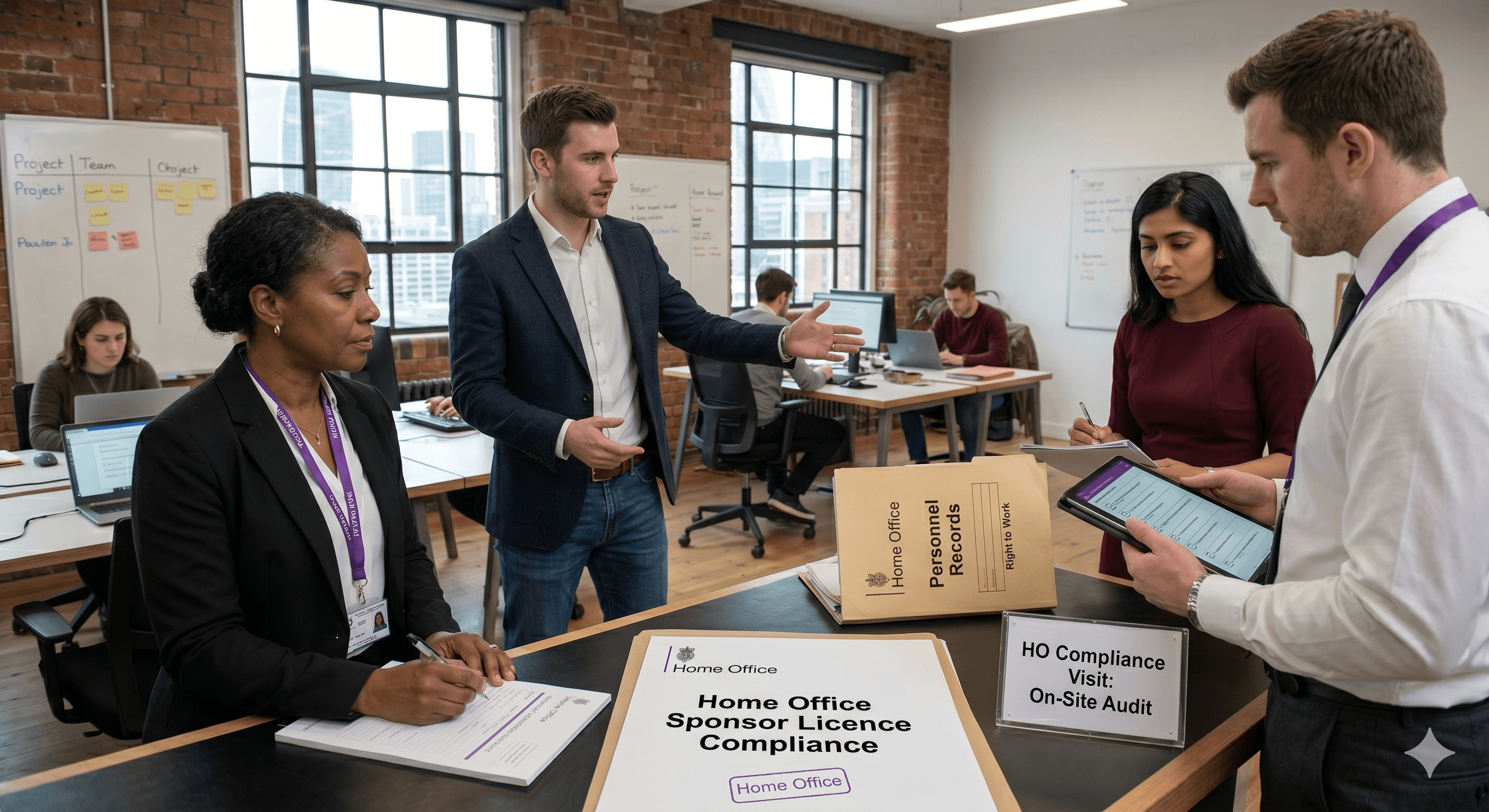
A Home Office compliance visit is an inspection carried out to check whether an organisation is able to meet, and is actually meeting, its duties as a sponsor. Visits can take place before a sponsor licence is granted or at any point while the licence is held.
A well-prepared organisation has little to fear from a visit. But gaps in records, inconsistent answers from staff or roles that do not match the Certificate of Sponsorship can quickly lead to downgrading, suspension or revocation of the licence.
Types of compliance check
- Pre-licence checks: the Home Office may carry out a compliance check before deciding a sponsor licence application, to confirm the organisation is genuine and that its HR systems are adequate.
- Post-licence checks: once licensed, a sponsor can be checked at any time, either routinely or because of specific concerns or information received.
- Announced or unannounced: officers may give notice, or arrive without warning.
- On site or digital: checks can take place in person at your premises or remotely.
In addition, the Home Office runs regular checks on sponsored workers' pay using HMRC data. Sponsors must give officers full access, including at third-party client sites where sponsored workers are placed.
What officers typically check
- Record keeping: whether the documents listed in Appendix D of the sponsor guidance are held for each sponsored worker.
- Right to work: whether correct checks were carried out and retained. See right to work checks.
- Genuineness of roles: whether the work being done matches the job description, occupation code, hours and salary on the Certificate of Sponsorship. Officers may interview sponsored workers and their managers.
- Pay: whether workers are paid at least the amount stated on the certificate.
- Monitoring and reporting: whether absences, changes of role or location and other events have been reported on the Sponsor Management System within the required time limits.
- Key personnel and SMS: whether the people named on the licence are still in post, suitable and using the system correctly.
- HR systems: whether recruitment, contact details and attendance records are properly maintained.
How to prepare
- Audit every sponsored worker's file against Appendix D.
- Check that right to work evidence is complete, correctly dated and follow-up checks are diarised.
- Compare each worker's actual duties, hours, location and pay with the certificate.
- Check that all reportable changes have been reported on the SMS.
- Confirm the key personnel and SMS user details are accurate.
- Brief managers and sponsored workers on what a visit involves, without coaching answers.
During the visit
Be co-operative and organised. Have files accessible, make sure a senior contact is available, and keep a note of what was asked and what was provided. If officers ask for documents you cannot produce on the day, note the request and follow up promptly. Answers should be accurate and consistent; if someone does not know the answer to a question, it is better to say so than to guess.
After the visit
If the Home Office is satisfied, no further action may be needed. If concerns are identified, the sponsor may receive a proposal to downgrade the licence to a B-rating with an action plan, a suspension notice, or in serious cases a revocation decision. In most cases there is a short deadline, commonly 20 working days, to respond. See our page on suspension and revocation.
If the check finds evidence of illegal working, the organisation may also face a civil penalty.
Common problems we help with
- Right to work checks carried out incorrectly or not retained.
- Workers doing different duties, or working in a different location, from the certificate.
- Changes in salary or hours not reported.
- Out-of-date key personnel details or inactive SMS users.
- Pre-licence visits where the organisation's systems are still being set up.
How Stonebridge can help
- Mock compliance audits that follow the approach Home Office officers take.
- A written report of gaps, risks and practical fixes.
- Preparing staff and managers for pre-licence and routine visits.
- Representations to the Home Office if concerns are raised after a visit.
- Ongoing sponsor licence compliance support.
Whether a visit has been announced or you simply want peace of mind, book a consultation to arrange a compliance review.
Speak to an Adviser
Ready to Discuss Your Case?
Book a confidential 30-minute consultation with an IAA-regulated adviser, in London, Birmingham, or by phone and video.